
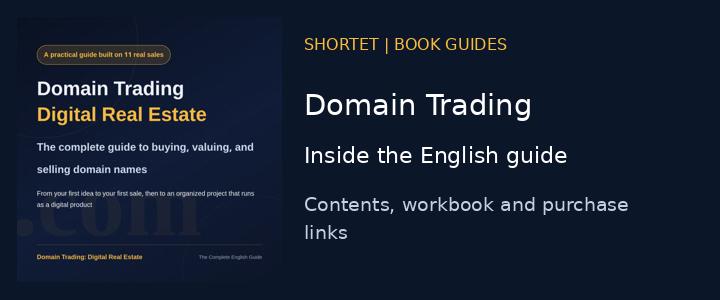
Domain Trading: Digital Real Estate | The Complete Guide to Buying, Valuing and Selling Domain Names is an English digital book about choosing domains, evaluating them, negotiating and managing a portfolio. The current listing describes a 169-page PDF with 12 chapters, practical appendices and an XLSX resources workbook.
This is a guide to the book's published contents, not an independent review or a promise of investment returns. Product details and listed prices below were checked on 16 October 2026.
What does the English edition cover?
The book follows the domain-trading process from understanding the market and choosing a first name through valuation, selling and organized portfolio management. Its seller descriptions list these areas:
- Domain types: Geo, EMD, Upgrade, AI and SI.
- Buying and evaluation: valuation, expired domains, auctions and a pre-purchase checklist.
- Selling: inbound and outbound approaches, sales channels, negotiation and safe payment.
- Costs and risks: commissions, net proceeds, trademarks and common mistakes.
- Organization: a 90-day action plan, buyer outreach templates and a glossary.
These are topics named in the product description. This article does not reproduce the book's chapters or present its advice as a verified valuation formula.
What is included besides the PDF?
The advertised bonus is an XLSX practical resources workbook. The listing describes sector word banks, 1,000 raw name combinations to filter, and worksheets for portfolio records, demand testing, renewals, negotiation and closing.
The word "raw" matters. A name combination is an idea to investigate, not proof that the domain is available, legally safe, commercially useful or likely to sell. Treat the workbook as working material, not a list of guaranteed opportunities.
What are the sales examples?
The seller describes 11 of the author's sales documented with screenshots and figures across Afternic, Sedo and Spaceship, including a counter-offer negotiation and calculations after commissions. That is a claim about the examples included in the book, not a claim that readers will repeat those results.
When studying any case, separate the purchase cost, holding costs, sale price, marketplace fees and final proceeds. A completed sale tells a different story from an asking price. The useful learning question is how the decision and transaction worked, not whether the largest number makes the purchase look exciting.
Who is it for?
The published description names beginners, digital investors who want to study valuation and sales channels, and builders or entrepreneurs interested in digital assets. A reader looking for an organized introduction and practical worksheets can compare that outline with what they already know.
It is not presented here as a personalized investment plan, a substitute for legal advice or a guarantee of a first sale. If you need a specific answer before buying, check the seller's description and contact route rather than assuming a chapter contains it.
Buy the English edition
The English edition was listed at US$20 on both stores when checked. Review the final checkout total, currency, applicable taxes and store terms before paying.
The stores describe delivery of the PDF and workbook by email after purchase. Check the email entered at checkout and the delivery instructions on the store you choose. These are purchase links, not free downloads.
Is there an Arabic edition?
Yes. The Arabic listing describes a 155-page PDF and resources workbook, listed at US$15 when checked. If Arabic is your preferred reading language, use the Arabic edition on Cartgy or the Arabic edition on Gumroad. Confirm the language before checkout.
Frequently asked questions
Is this a printed book?
The current product descriptions offer a PDF and XLSX workbook. They do not describe a printed copy being shipped.
Does it guarantee income from domains?
No income guarantee is made here. Buying names can involve costs and uncertainty, and past examples do not promise a future sale.
Does the book include a tool directory?
The listing describes 58 platforms and tools with verification notes. Their current prices, availability and policies still need checking at the time you use them.
Where should a beginner start?
Start with the outline, then the buying and risk topics before treating any generated name as a purchase decision. Use the practical checklists to record questions rather than rushing to register names.
Related Shortet resources
The Shortet domain portfolio is a separate browsing route. For website infrastructure rather than domain trading, use the domains and hosting collection. A directory listing is not a recommendation to buy a particular domain.